Practical HVAC Choices for Facility Managers Balancing Comfort, Risk, and Budget
Assess the current HVAC baseline before committing to new work, beginning with a load profile across peak and off-peak hours. Document hot and cold spots, verify filtration performance, and inspect return-air paths. In practice, a clear baseline informs whether AC Repair or a broader retrofit is the smarter path. Meanwhile, review historical service logs to spot recurring faults that hint at underlying system mismatch.
Beyond that, scope a plan that aligns building usage with system types. Offices with variable occupancy may benefit from Heat Pumps or a Ductless Mini Split in zones that swing widely. Warehouses often need robust ventilation strategies layered with targeted conditioning. Then, validate whether existing electrical capacity and roof loading can support added equipment without costly structural changes.
However, lifecycle thinking should drive decisions more than short-term savings. Sequence options by expected service life, refrigerant type, parts availability, and ease of service access. Inspect condenser placements for airflow clearance, and verify drain routing to prevent nuisance shutdowns. Finally, buffer the budget for commissioning and owner training, which dramatically reduces nuisance calls post-project.
Meanwhile, AC Installation is only one part of a broader plan. Calibrate controls carefully so setback schedules mirror real occupancy. Refine sensor placement to avoid sun or draft bias, and validate economizer operation if applicable. Often, energy targets fail when controls are left on default settings. Stage testing under both mild and extreme conditions to confirm stability before handoff.
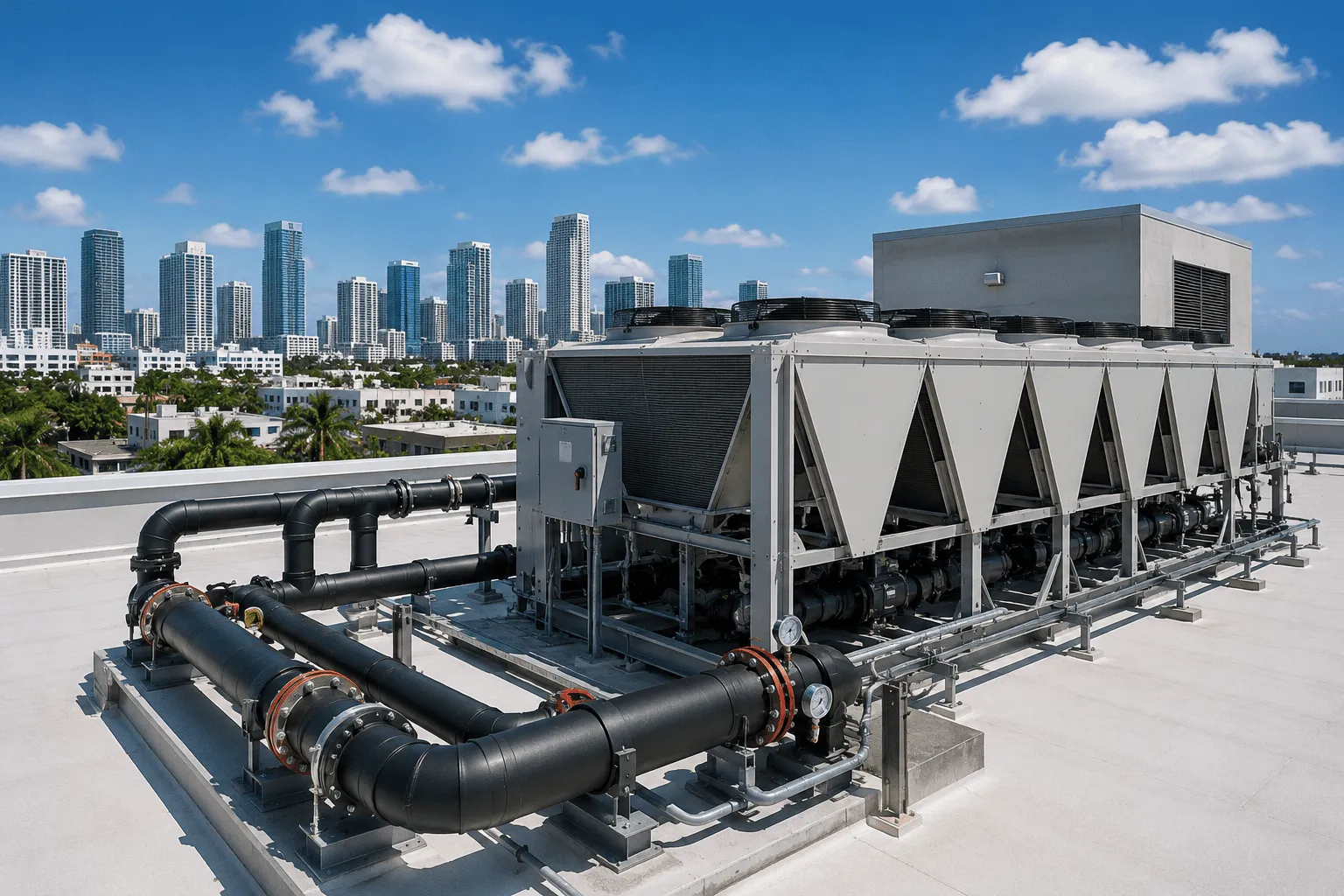
Then, consider large-building cooling strategies where Chiller Installation or Cooling Towers are in play. Sequence pumps and condenser fans to match real load, and verify water treatment protocols early to protect heat exchangers. Inspect strainers, document setpoints, and maintain baseline trend logs. In practice, that data speeds diagnostics and helps decide whether Chiller Repair or phased upgrade is warranted.
Next, plan HVAC Maintenance windows to avoid peak season disruption. Align filter changes, belt checks, and coil cleaning with occupancy lulls. Validate refrigerant charge only after airflow is proven, since dirty coils distort readings. Meanwhile, keep a spare-parts matrix for mission-critical air handlers to shorten downtime, and document who authorizes emergency calls after hours.
Often, ventilation quality drives comfort more than raw cooling capacity. Verify outside-air intakes are clear and dampers move freely. Inspect for negative pressure that pulls in unconditioned air through gaps. Maintain hooded intakes and drain pans to reduce moisture risks. Beyond that, review space pressurization around lobbies and loading docks, where doors cycle frequently and infiltration spikes.
Then, evaluate noise and vibration early, especially near conference rooms or tenant suites. Stage vibration isolators correctly and balance fans to reduce droning. Validate rooftop equipment clearance so service panels open fully. Maintain pathways for safe ladder access and fall protection. Finally, document these constraints in the design narrative so future upgrades don’t recreate the same issues.
Moreover, zoning decisions affect comfort equity and energy use. Align thermostats with real zones, not just architectural lines. Verify airflow balancing at diffusers and return grilles, and refine supply temperatures in steps rather than large swings. In practice, smaller adjustments prevent short cycling while preserving dehumidification. Inspect insulation continuity around ducts to avoid condensation and wasted capacity.
Ultimately, vendor fit matters as much as equipment selection. Validate response times, parts stocking, and documentation quality in advance. Maintain a single source of truth for submittals, startup reports, and warranty records. Assess whether the partner can support emergency calls during extreme weather. Finally, phase upgrades to limit downtime, and keep a running punch list to close gaps before seasonal loads return.